01
Preventive conservation
High-resolution 3D model before restoration. Long-lived reference for fragile or non-exhibitable pieces. Cross-time condition comparison.
On-site digitisation of artworks, furniture and heritage spaces, for conservation, digital mediation and wider access to collections.




Collection scanning on site, including inside reserves. Production of virtual exhibitions, mediation tools, 3D educational content, interactive online viewers.
Scanning of works for catalogues, remote presentation to collectors, high-fidelity archiving, loan and exhibition files.
Lidar and photogrammetric scanning of spaces, rooms, façades, monuments. For archiving, restoration files, public mediation, reproduction of architectural elements.
36 masterpieces from the national collection of Chinese porcelain scanned in storage. Virtual exhibition on Unreal Engine 5, in pixel streaming. Curated by Sophie Makariou and Claire Déléry.
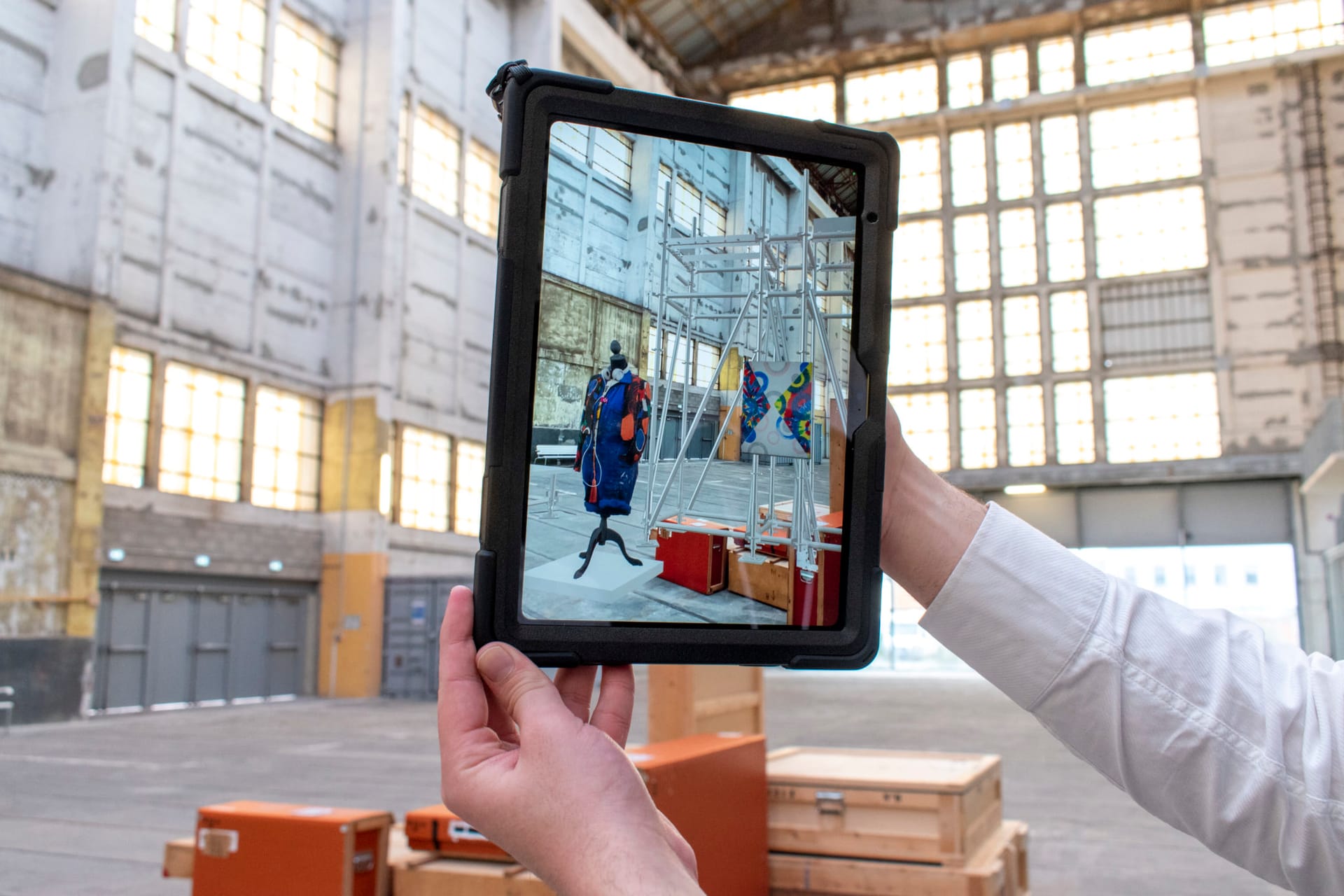
Dunkirk, 2023: 19 works from the collection, chosen by pupils of the Gaspard Malo secondary school, scanned by photogrammetry inside the Frac's own spaces. Socle also designed the immersive experience that lets visitors explore them on tablet and smartphone, in the Halle AP2.
The Tuileries palace reconstructed in 3D with its furniture under Napoleon I: 1,900 m² rebuilt, over 500 objects modelled, 5 pieces scanned by photogrammetry. Online serious game, in pixel streaming.
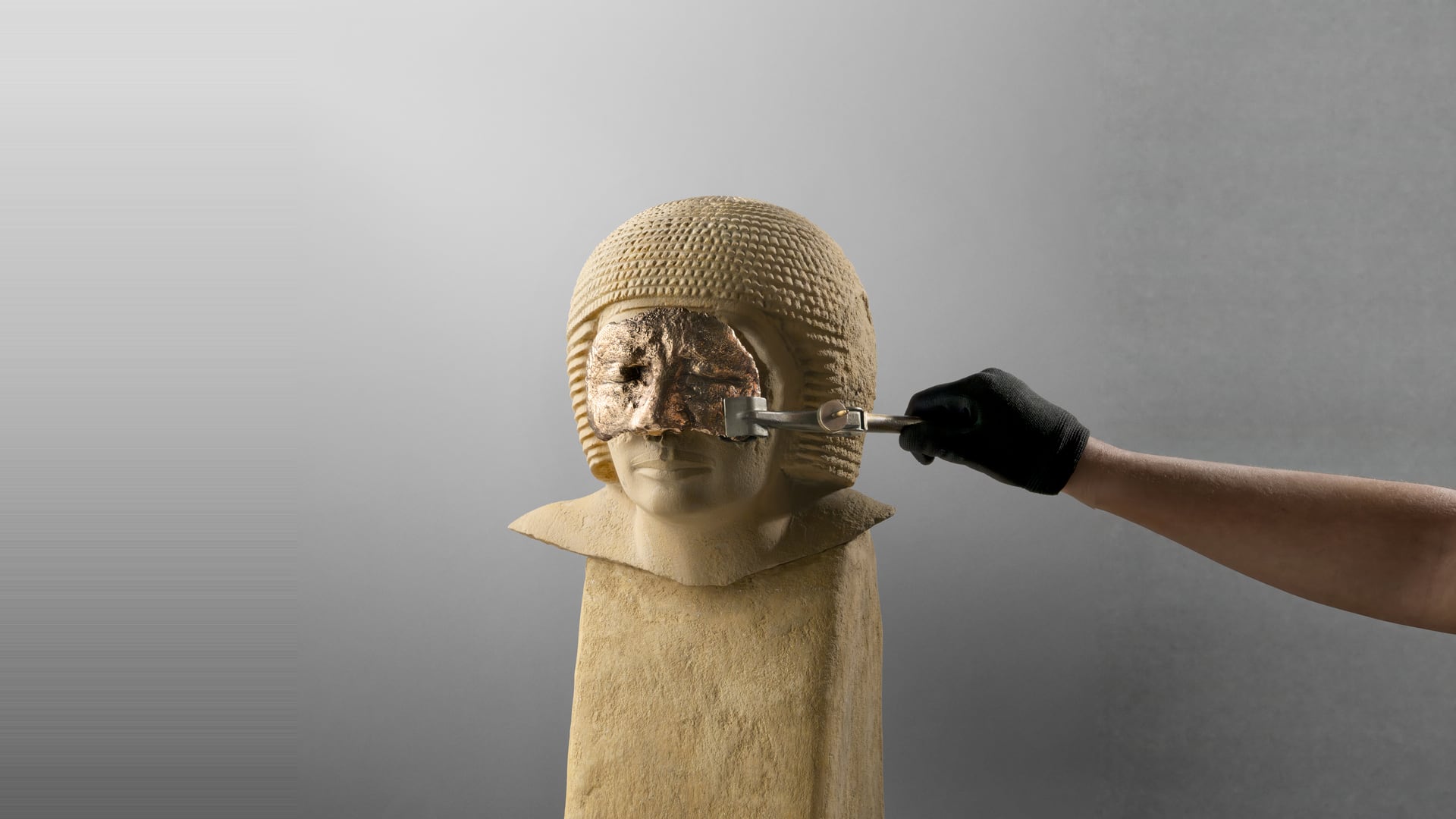
Museo Egizio, Turin, 2024: seven artefacts from the collection, sarcophagi and statues deprived of their gaze. Socle modelled the missing elements in 3D, reshaped to the artist's vision from 3D scans of the artefacts, before casting in polished bronze. Later shown at the Bourse de Commerce, Paris.
High-resolution 3D model before restoration. Long-lived reference for fragile or non-exhibitable pieces. Cross-time condition comparison.
Visitor manipulation of works in 3D (rotation, zoom, flipping). Web viewers accessible from any device. Educational content for school audiences.
Reconstructions of exhibitions or places. Developed in Unreal Engine 5, accessible online via pixel streaming, no software install required.
High-fidelity facsimiles for touch, education, preservation. Reproduction of architectural elements. Compatible with FDM, SLA, SLS. Mesh optimisation for strength, precision and material economy.
A documented protocol, aligned with the French Ministry of Culture's guide for drafting 3D digitisation specifications: raw acquisition and processing kept separate, documented decimation, metadata for every work. Read the guide
No contact throughout the capture. The piece is positioned once by the institution's registrar; from then on, only the motorised turntable moves, slowly. Continuous lighting, soft lightboxes, conservation conditions respected. The setup adapts to the piece, never the reverse.
Yes, it's our standard mode for pieces not on display. The 36 porcelains from the Musée Guimet's national collection were scanned in storage. The 40 Brâncuși works at Centre Pompidou were captured on site within the exhibition.
Redundant archiving during the project. Master files handed to the institution at delivery, in long-lived formats (OBJ, USD, PLY for point clouds). No technical dependency on our infrastructure.
Yes. The studio answers calls for tenders and public procurement; it has worked with Centre Pompidou, Mobilier National, Musée Guimet and FRAC Hauts-de-France. Detailed quotes, contractual guarantees, documented deliverables, human and technical resources described.
For each piece: precise dimensions, capture conditions, equipment used, operator, date. A reference set fit for museum documentation and condition comparison over time.
Yes. Compatible with FDM, SLA, SLS depending on use: facsimiles for tactile mediation, architectural restitution, reproduction of fragmentary elements. Mesh optimisation for strength, precision and material economy.
Yes. For an application to the national programme for the digitisation and promotion of cultural content (PNV) or to a France 2030 call for projects, the studio provides the detailed quote, the protocol description, the delivered formats and metadata, the schedule and references.
Two items: production, then the monthly hosting of the pixel streaming, sized to the real audience rather than the hoped-for one.
Quote and budget estimates on request, adapted to the nature, volume and schedule of the project.
Marais studio. Paris 75003. By appointment.
Used to public procurement.